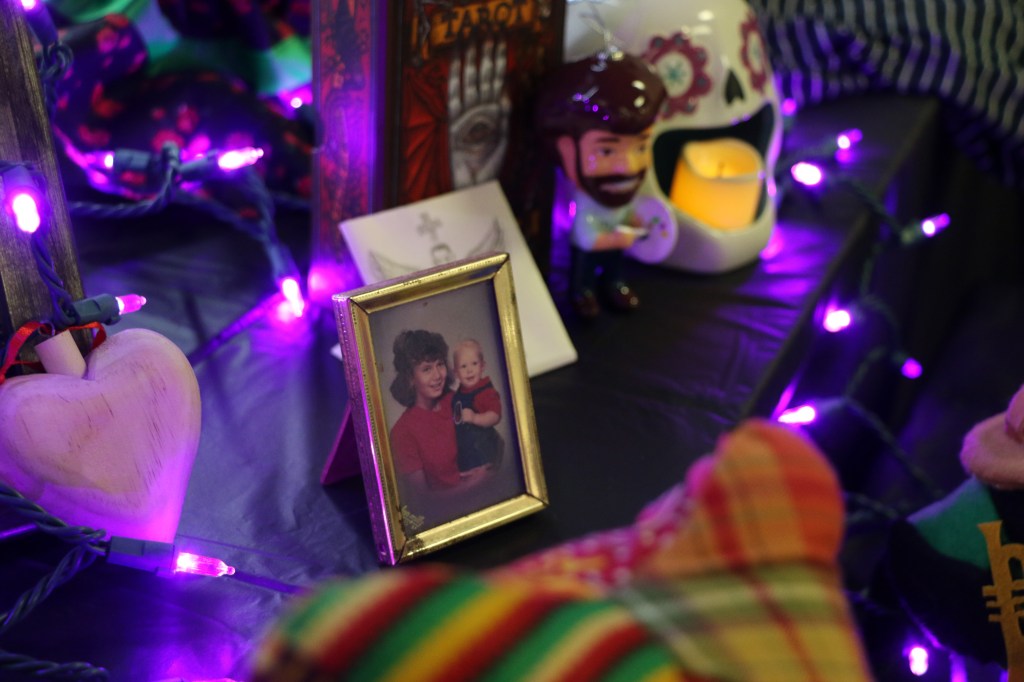
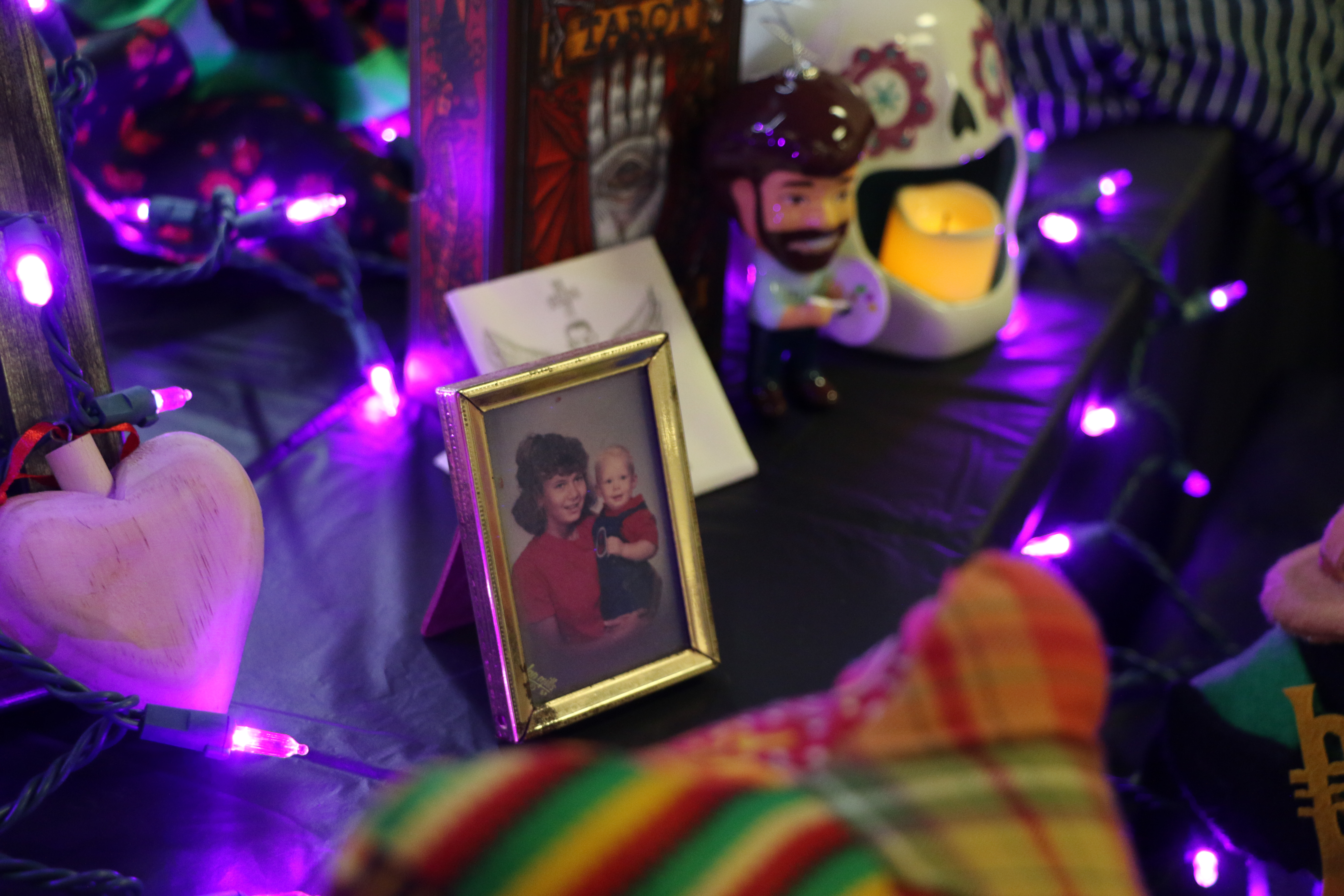
Framed photo of Ryan Black’s sister holding him as a child; PC: Camille Maria Acosta
On Wednesday, November 22nd, bright colors and warm lights filled the second floor of the Kentucky Museum, as the 3rd annual Día de los Muertos Community Ofrenda took shape. For two weeks only, this particular museum exhibit space carved pathways for Bowling Green community members to share memories, tell stories, and ultimately grieve.
Día de Muertos, or Day of the Dead, is a Mexican/Mexican-American traditional holiday celebrated on the night of October 31st through November 2nd in which individuals remember their loved ones who have passed on. Traditionally, families in Mexico make their way to the local cemeteries where their family and friends are buried. Once there, grave sites transform into offerings or ofrendas as they are adorned with flowers, candles, food, and items of commemoration. This heartfelt tradition dates all the way back to pre-Hispanic Nahua culture. According to Nahua mythology, when humans passed on, it was said that they had a long journey to Mictlán, or the place of eternal rest. In many burial customs, bodies were often laid to rest with tools, food, and other items to aid them on their path to Mictlán. Once there, the Nahua believed Mictēcacihuatl, or the Lady of the Dead, allowed spirits to make their way back to earth to reunite with family. On the evenings of these 3 special days, the dead walk among us, in unity.
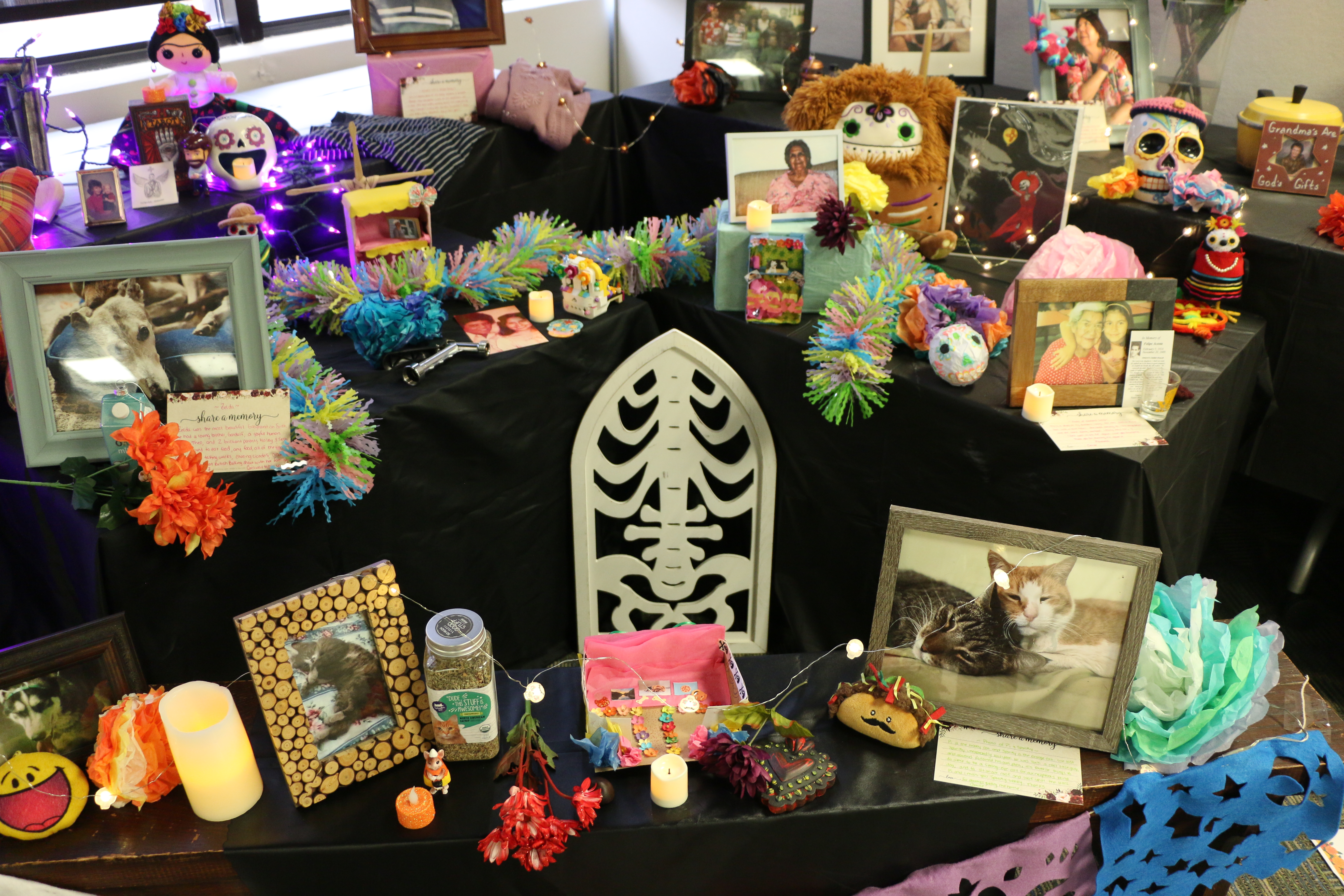
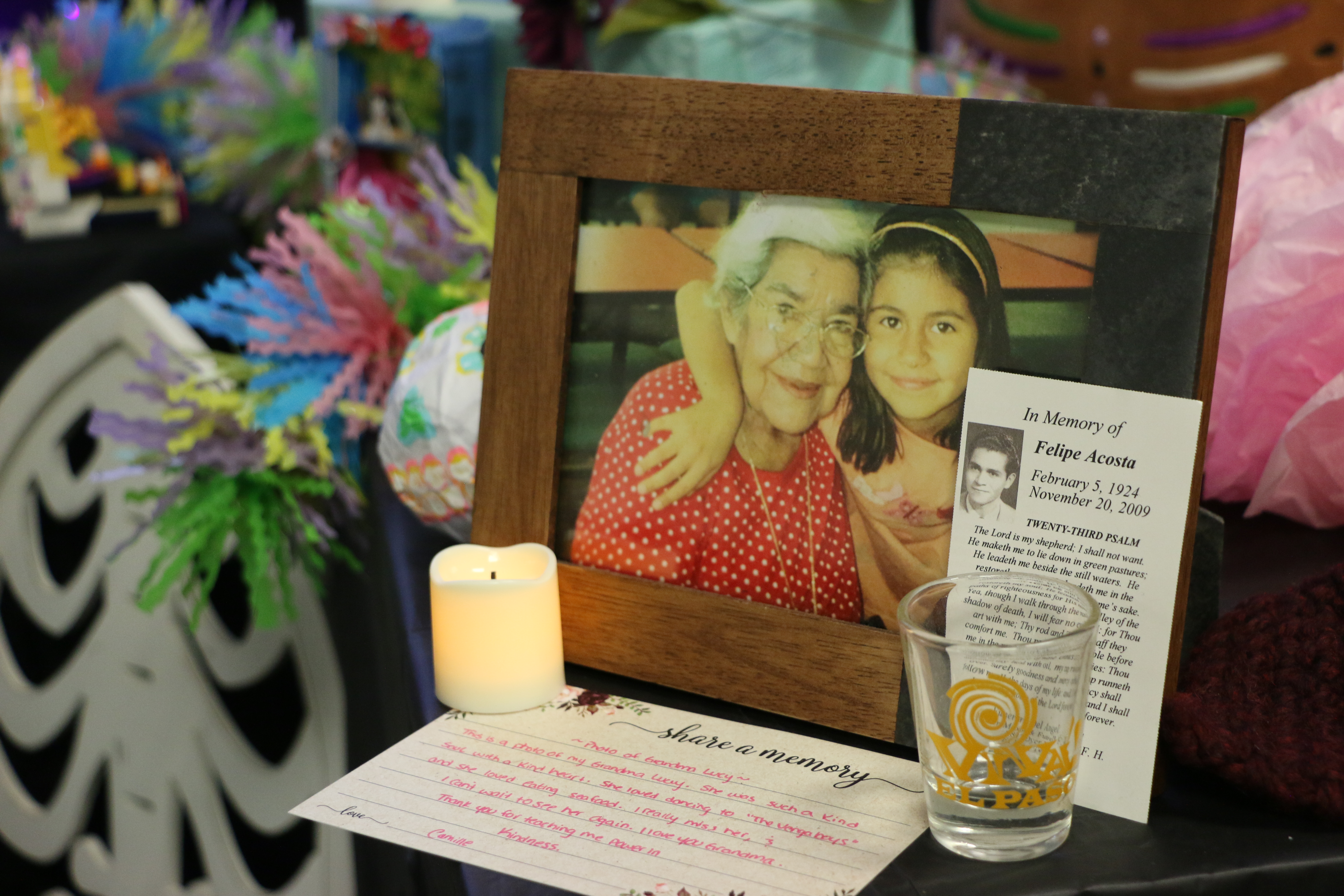

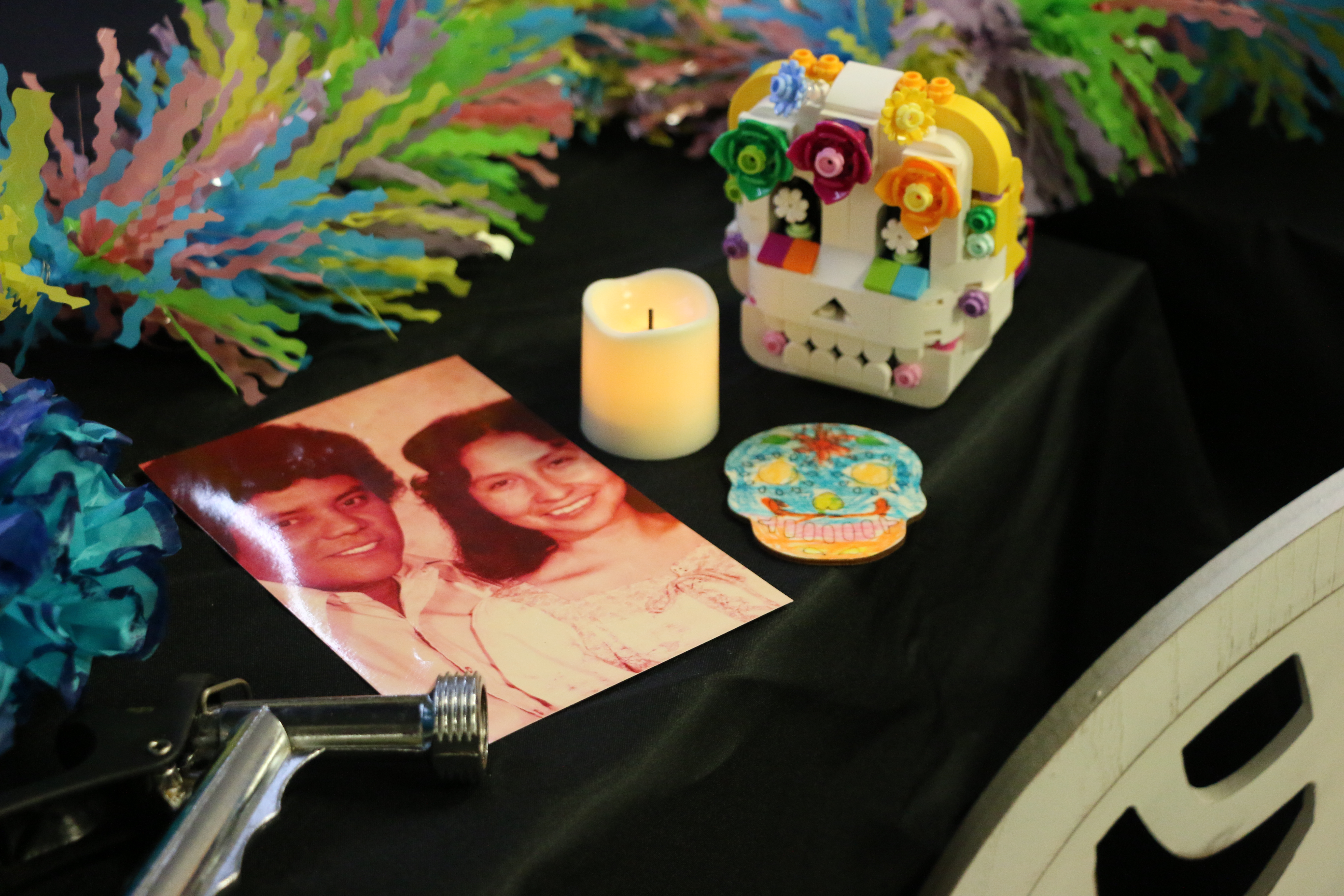
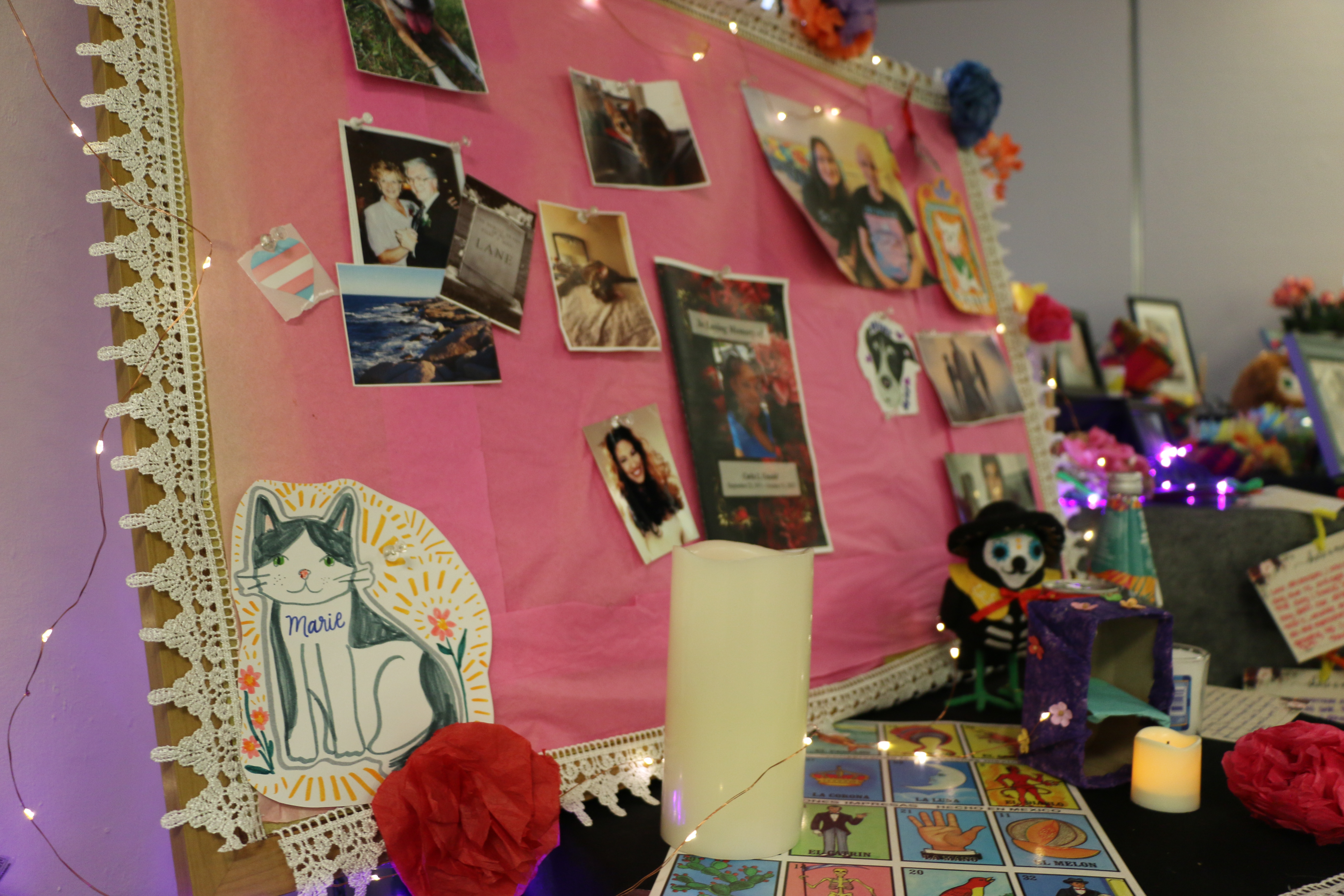
(From Top Left, Clockwise) Image of Center of the Ofrenda, A framed photo of Grandma Lucy with her husband Grandpa Felipe, A framed photo of Zelda the greyhound with an oat milk ornament, A cork board filled with loved ones both human and pet, A glossy photo of Deandra Perez’ parents alongside two colorful calaveras; PC: Camille Maria Acosta
In 2023, the Kentucky Folklife Program (KFP) crafted their first installation of the Día de los Muertos Community Ofrenda, giving the Bowling Green public the option to participate. Camille Maria Acosta, Folklife Specialist with the KFP spearheaded this tradition, and has made it a point to continue this custom every year since. “What was once born from a moment of homesickness,” Acosta states, “has since become a safe space for the Bowling Green community to talk about the pain, sadness, happiness, joy, and complex emotions that comes with grieving someone you loved so deeply. This ofrenda has now become a home for us all.” Typically, those celebrating Día de los Muertos will craft their own versions of an ofrenda or altar inside of their living spaces, whether that be their living room or their kitchen table. However, the KFP’s public display of a traditional ofrenda, has given the WKU community the chance to share grief in a communal space.
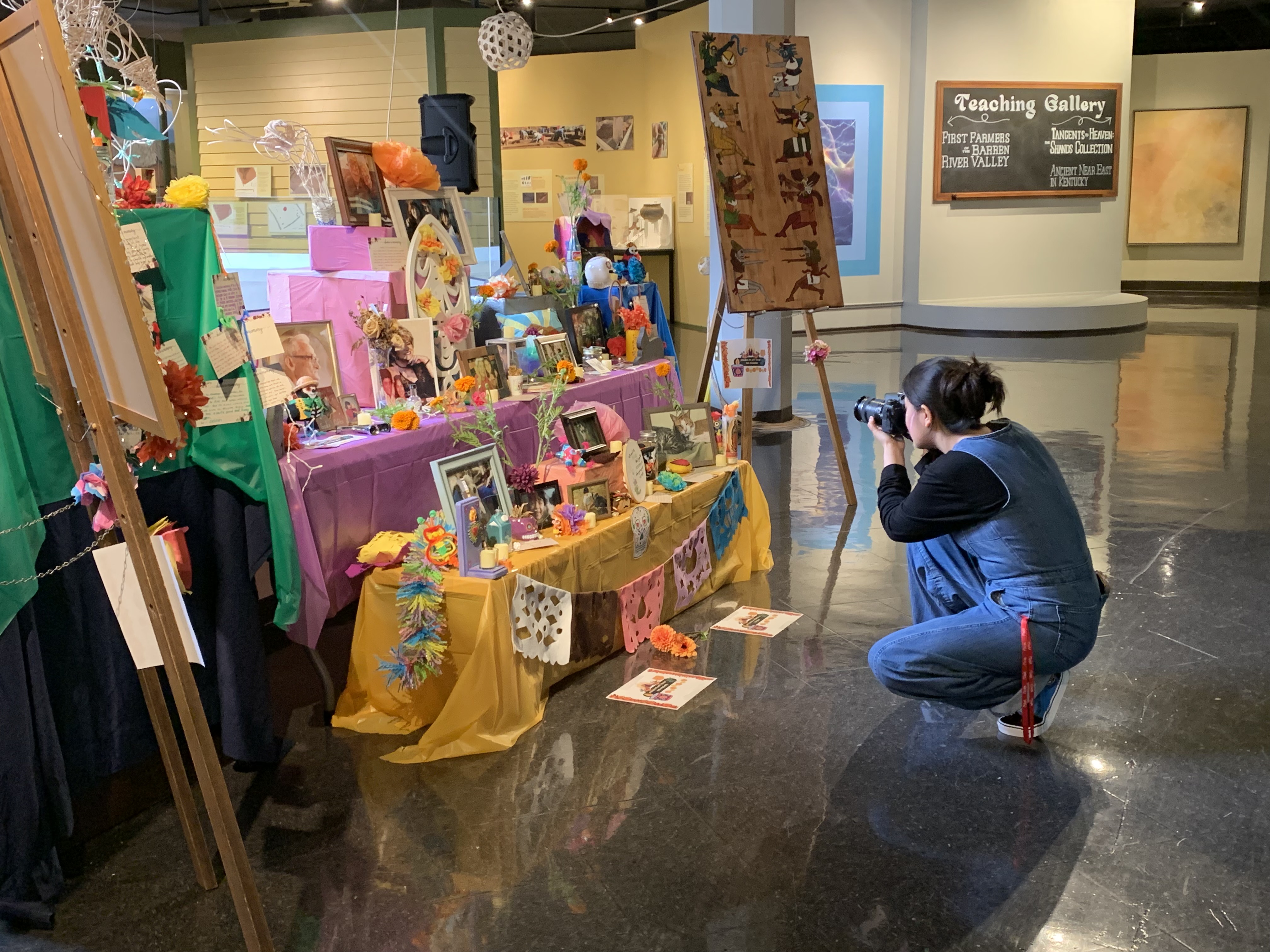
Camille Maria Acosta takes photo of the 2024 Community Ofrenda at the Kentucky Museum; PC: Dr. Sydney Varajon
Hosted at the Kentucky Museum on WKU’s campus, this year’s altar was the biggest display yet, with participation from across the United States. It was stunning to see the unique nature in which individuals, across state borders and across cultural backgrounds, could come together to bring the stories of their loved ones to light. Seeing photos of smiling faces, signature sweaters, cat toys, and folk art illuminated by LED candles and string lights felt magical; felt hopeful. Ryan Black, AV Support Specialist at WKU has been loaning items to the Community Ofrenda for the past two years. We shared smiles and lovely memories in front of the ofrenda of Ryan’s grandmother, as he placed her well-loved, dandelion yellow cooking pot next to her framed photo. Ryan mentioned, “[The ofrenda] taught me that even though we may have different backgrounds and cultures we truly are connected at a fundamental level, and that’s something important to remember…Traditions and rituals like the ofrenda create a sense of identity and purpose, something that can connect us through the years. Even if they change with the times and the people who celebrate them, their core is still there, and that’s something very important.”
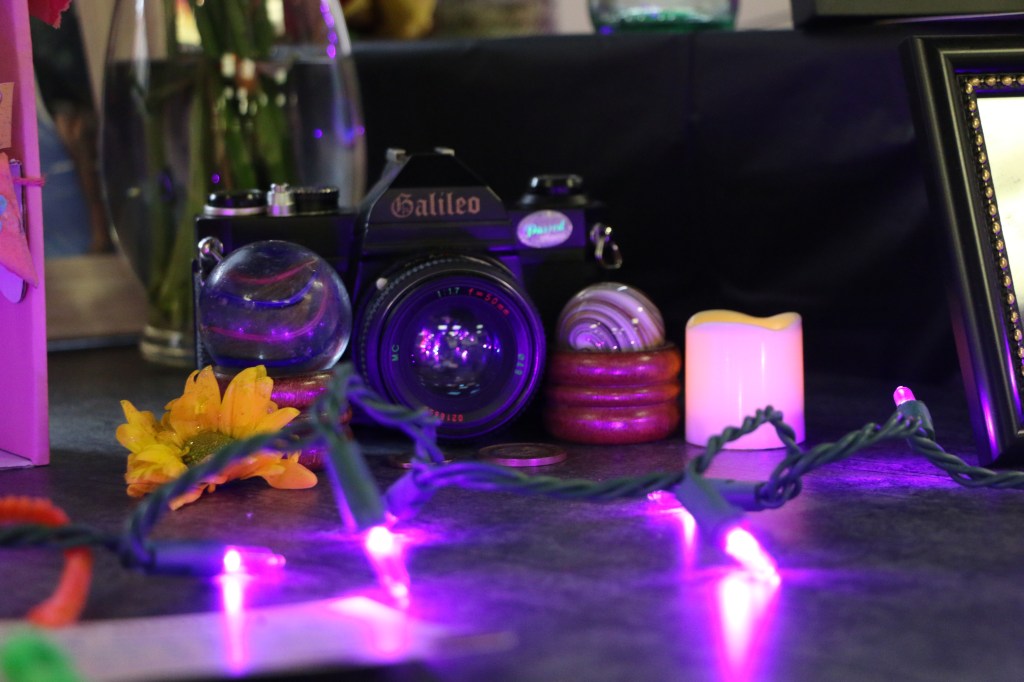
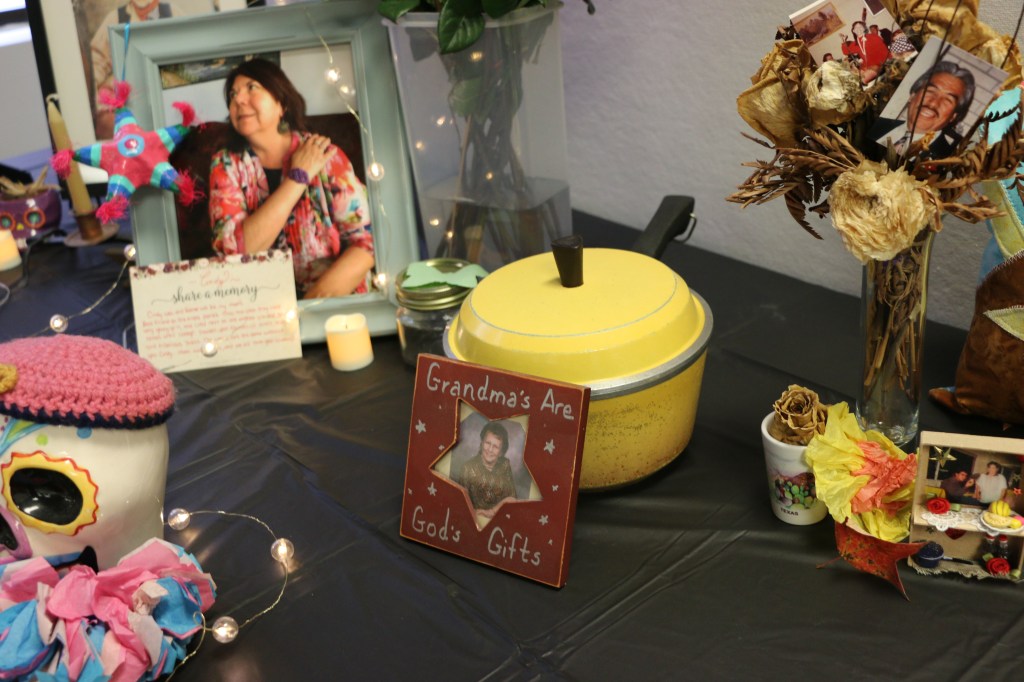
First Photo: A camera, marbles, and pesos loaned by Ryan Black & Joe Wilson; Second Photo: A dandelion yellow pot and a framed photo of Ryan’s Grandmother loaned by Ryan Black; PC: Camille Maria Acosta
One of the most important aspects of this ongoing project is to share the message that grieving never has to be experienced alone. Oftentimes, we are taught that grieving ends the moment your loved one passes on – the moment the funeral concludes. But of course, while everyone’s experience is unique, grieving is never linear. It is present when you eat ice cream cones on the pier, when you watch your favorite Fall film as the leaves turn bright orange, when you get accepted to a university that you’ve worked so hard for – grief, although often feared, is a friend to many. Campbell Lahman, WKU International Affairs & Chinese Major placed a coke can on the ofrenda alongside her other items. She mentioned one of her loved ones always offered a safe space to talk, alongside a crisp Coke Zero. Campbell stated, “The ofrenda was a beautiful space for me to remember my loved ones who’ve passed, and to see other people remember their loved ones as well. Even though I don’t know all the stories represented on the ofrenda, I saw that I was not the only one grieving, and that experiencing love and loss is something we all have in common. I’m proud of the traditions that make space for grief, and I’m grateful to the KFP for organizing such a necessary space for us to remember together.”
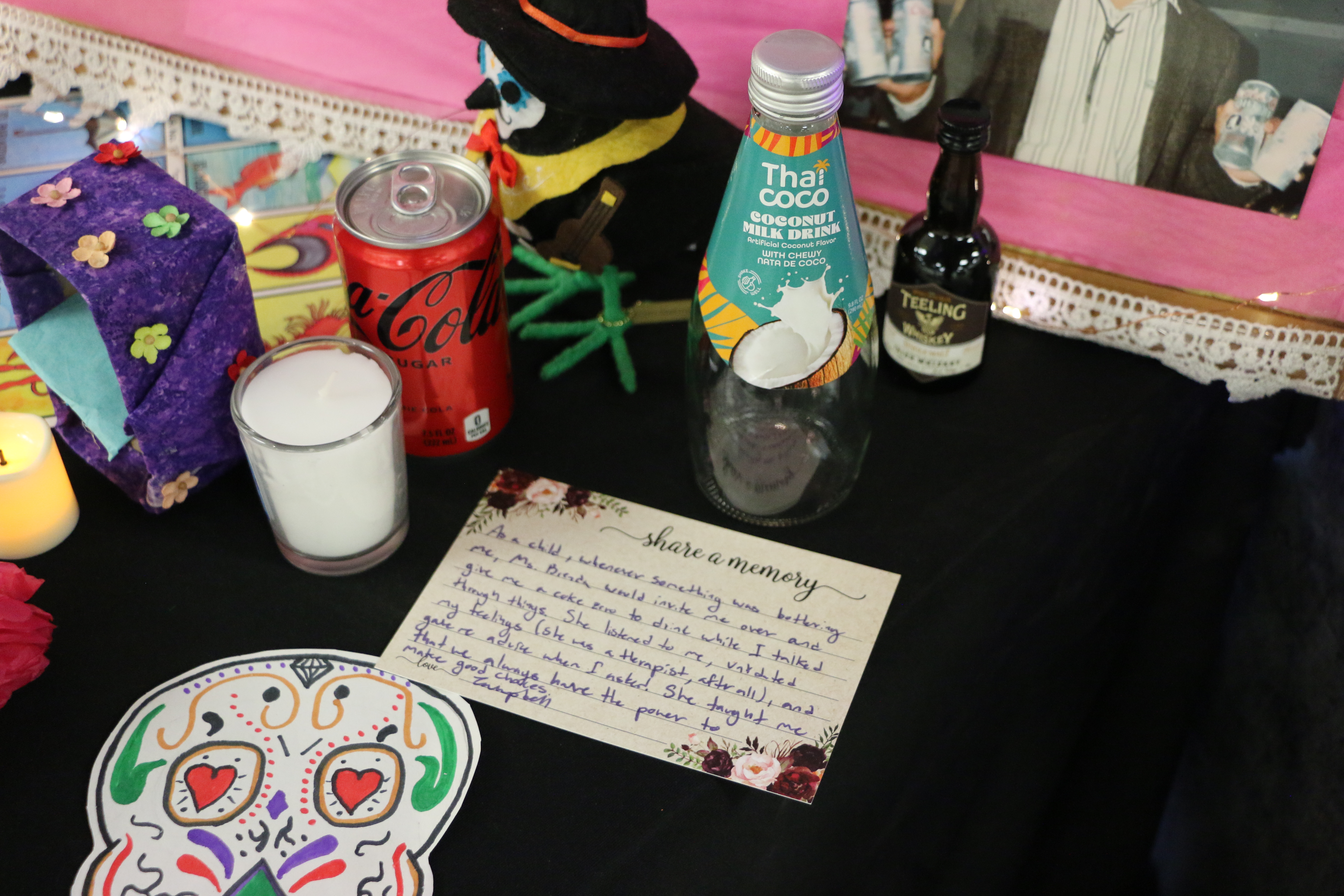
A candle, Coke Zero can, and Thai Coco bottle are placed on the ofrenda to commemorate Campbell Lahman’s loved ones; PC: Camille Maria Acosta
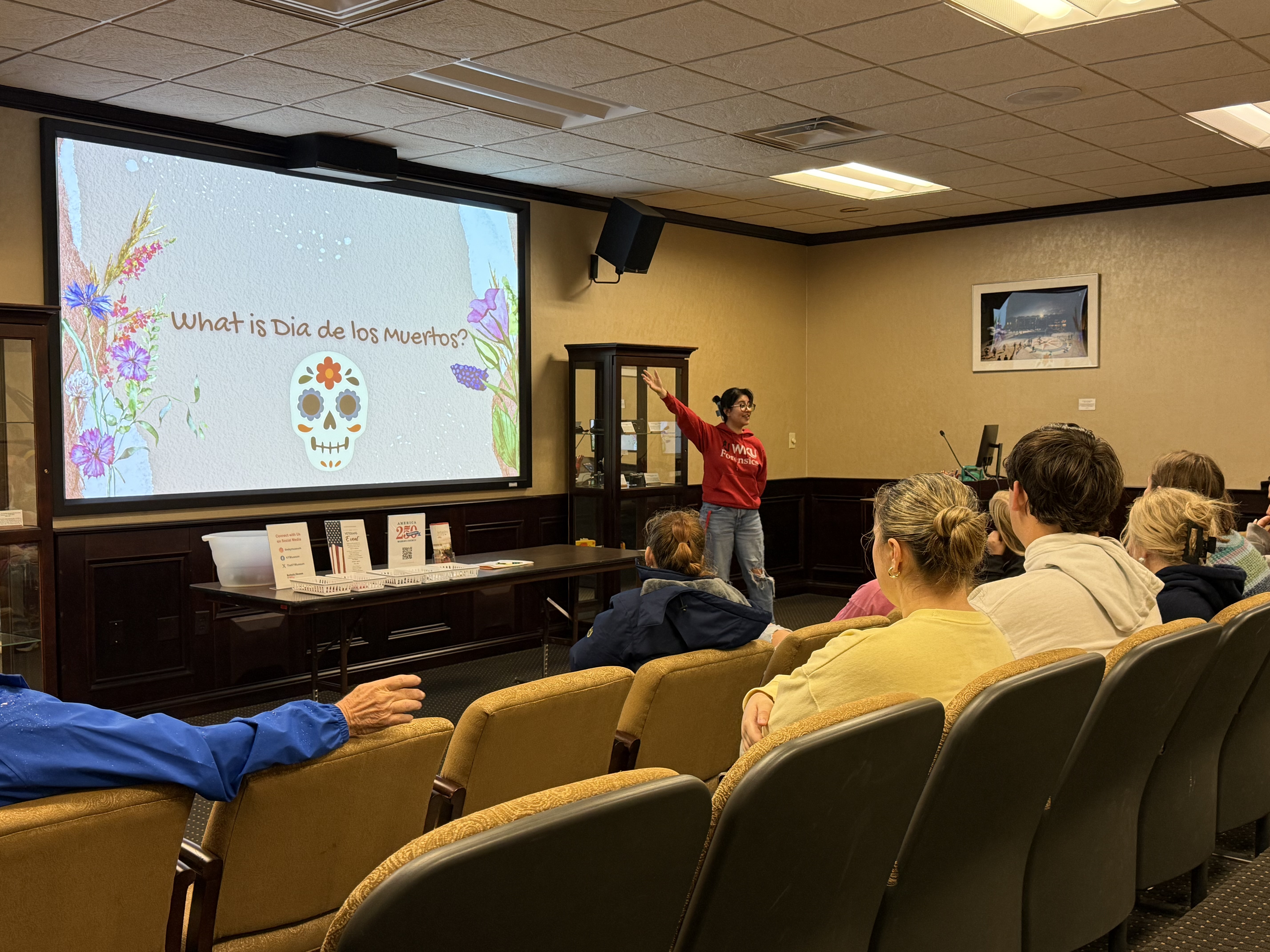
An exciting intersection of this Día de los Muertos exhibit is the chance to collaborate with K-12 schools and university classes. From South Green Elementary in Glasgow, Kentucky to WKU’s Intro to Folklore Class, weaving together this cultural holiday with student curriculum was enlightening. Throughout the run of this ofrenda, students of all ages across Kentucky visited the altar to learn about Mexican folklore and traditions, asked questions about grieving customs, and even made mini ofrendas of their own. John Yakel, Instructor for WKU’s Art Education program hosted his Art 310 Elementary Education students at the Kentucky Museum for an afternoon of folk art exploration and craftmaking. Students used recycled materials such as cardboard boxes, string, and tissue paper to make tiny “take home” versions of Dia de los Muertos altars. The hope for classes like these, is to incorporate cultural activities and folk art lectures into future elementary school curriculum. When asked about the impact of this exhibit on his students, John responded, “Making ofrendas and celebrating Día de los Muertos reminds us that we are living the hopes and dreams that our ancestors wished for us. They are traveling with us in our DNA, and in our hearts and minds. It is my hope that we make them proud of all we have become.”

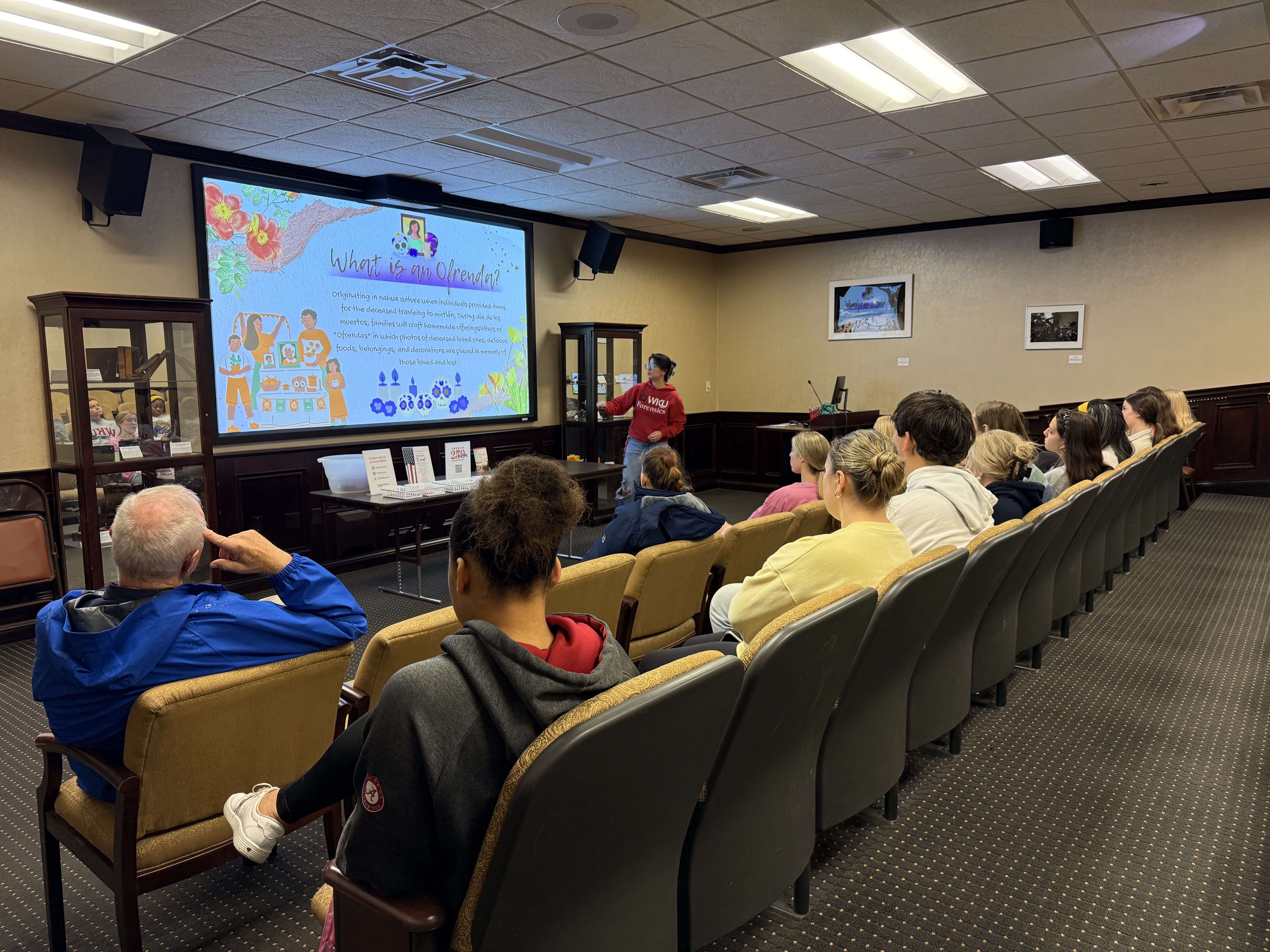

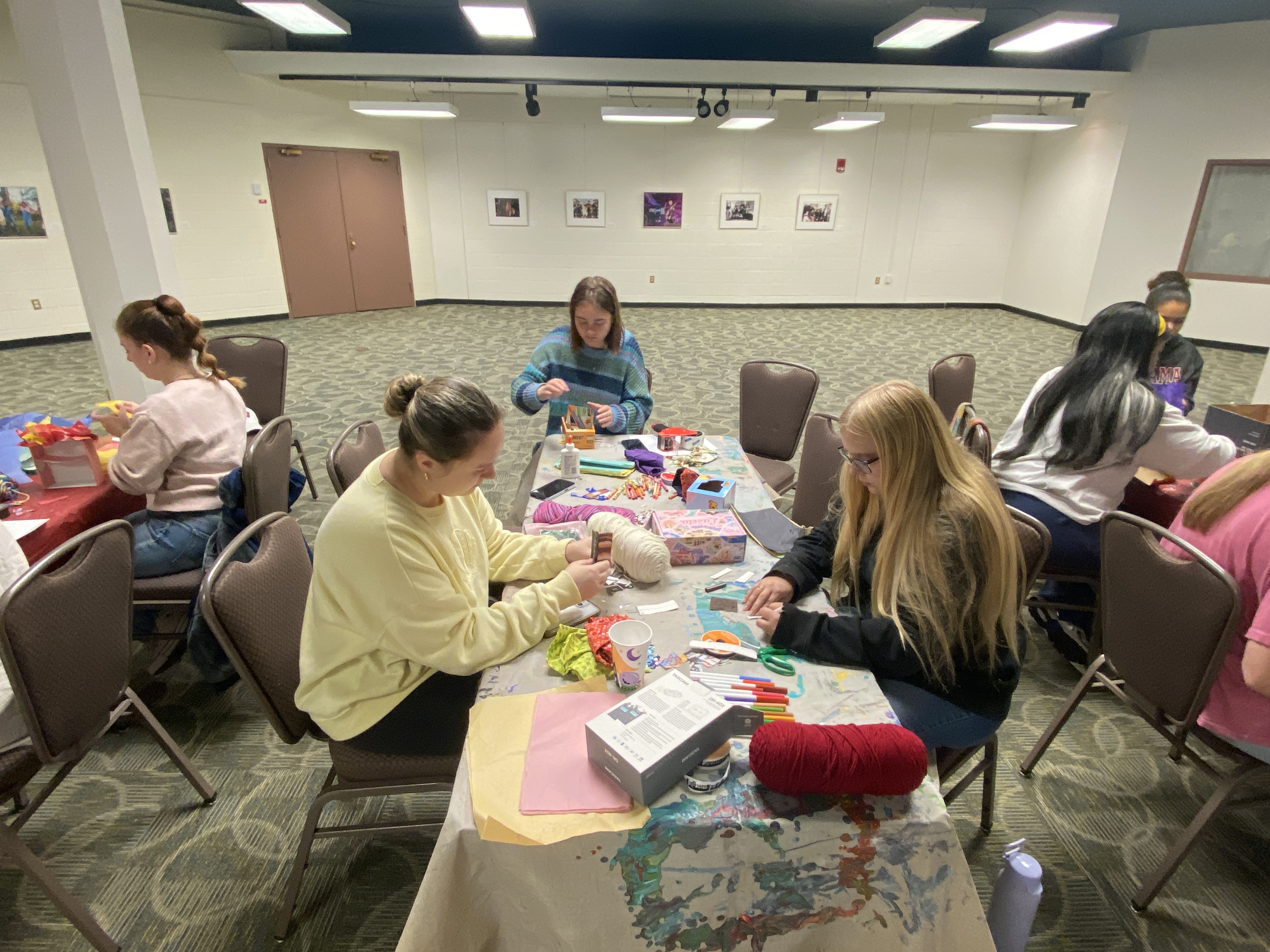
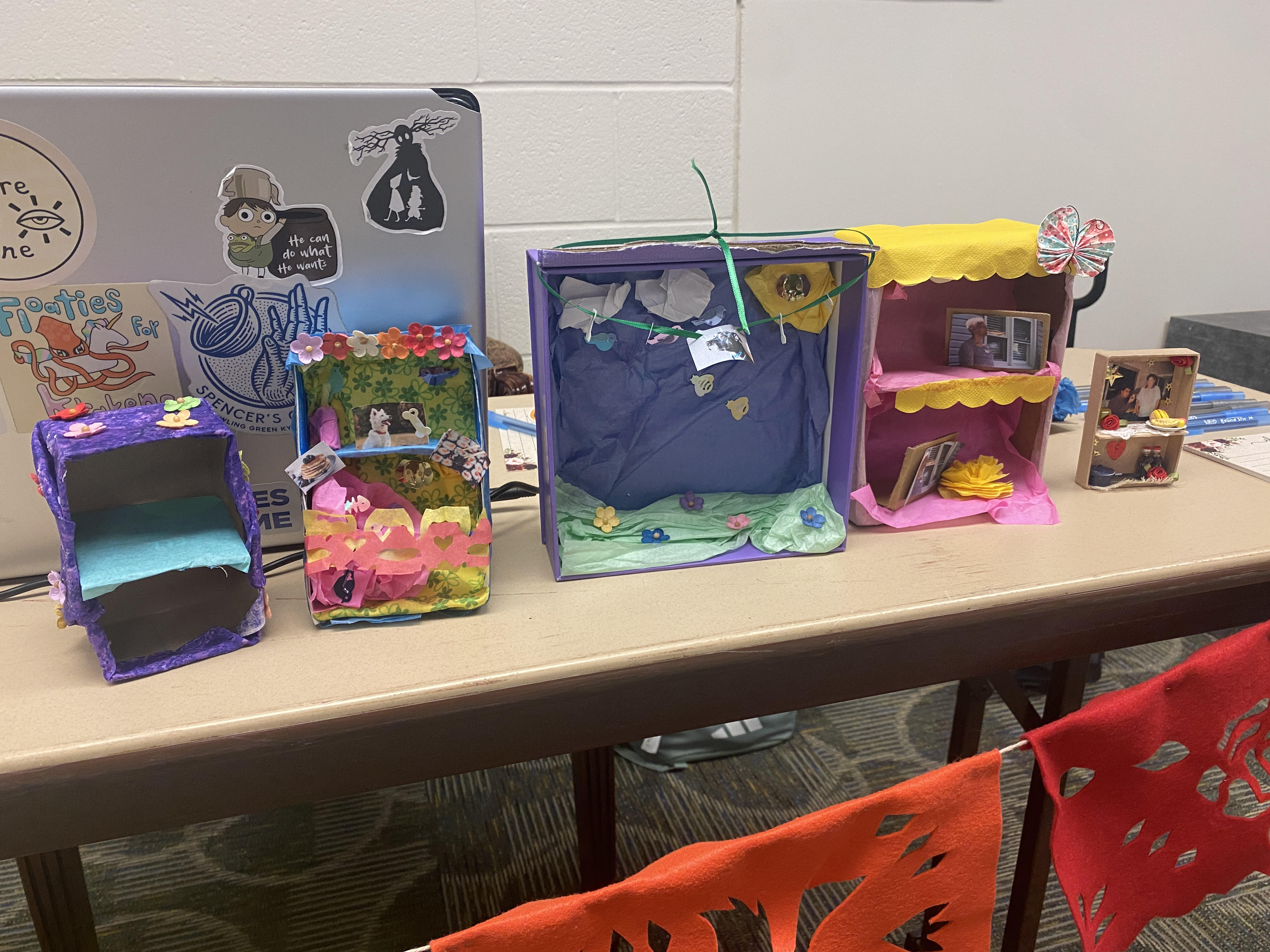
This year, many community members also took the time to use their items of commemoration as a medium for advocacy. Dr. Robin Valenzuela, Assistant Professor of Anthropology at WKU is also the co-founder of Indiana AID (Assistance to Immigrants in Detention). According to their website, “Indiana AID is a volunteer group that supports individuals detained by ICE in Indiana by bearing witness to their experiences through visits, offering information, and providing resources to them and their families.” Dr. Valenzuela’s offerings for this year’s ofrenda display included breathtaking hand drawn art pieces from individuals detained in Indiana. It is important to note that each of these drawings were created with the sole use of a golf pencil, for that was the only artistic item allowed in this detention center. When asked about the meaning behind these loaned art pieces, Dr. Valenzuela continued, “The ofrenda provides a wonderful opportunity to call attention to those who have been separated from their families and disappeared into the immigration detention system. It provides an opportunity to show their humanity and their resilience in the face of social death…It’s important for us to recognize the impact that other people have had on our lives and the deep emotions that come with loss. Recognizing this publicly helps us build supportive relationships across our community.”


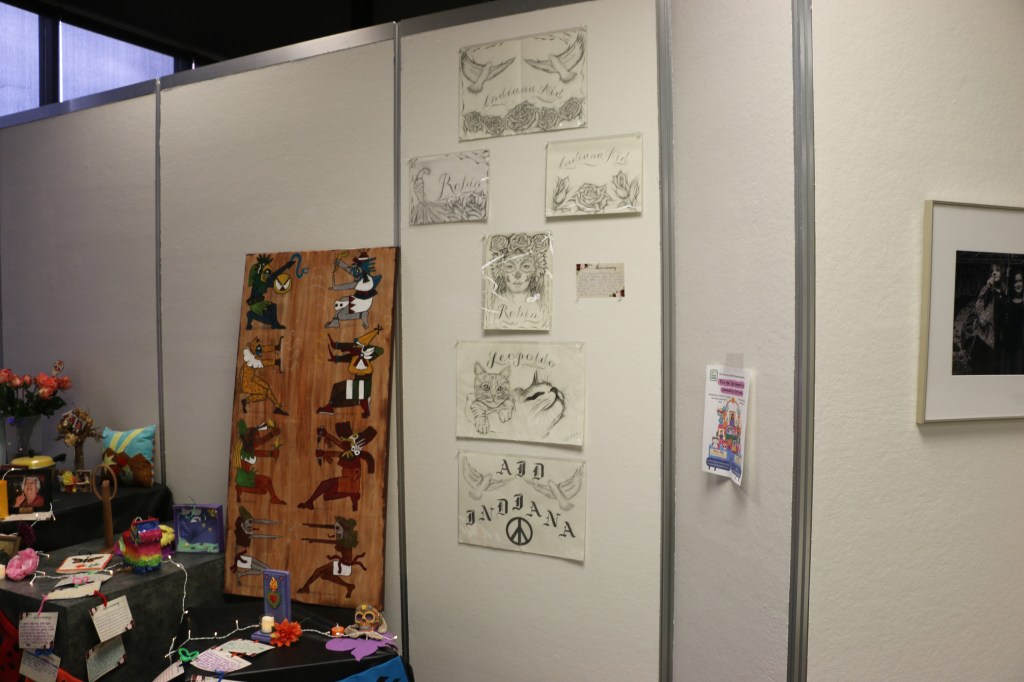
Detailed sketches created with golf pencil by an individual detained by ICE in Indiana, courtesy of Indiana Aid & Dr. Robin Valenzuela; PC: Camille Maria Acosta
We’d love to send a heartfelt thank you to the Kentucky community for showing up for our Día de los Muertos Community Ofrenda this year, and every year. Thank you for taking the time to grieve with us, share stories of those come and gone, and ultimately, continue the conversation that we all need so desperately; a gentle reminder that we are not alone.
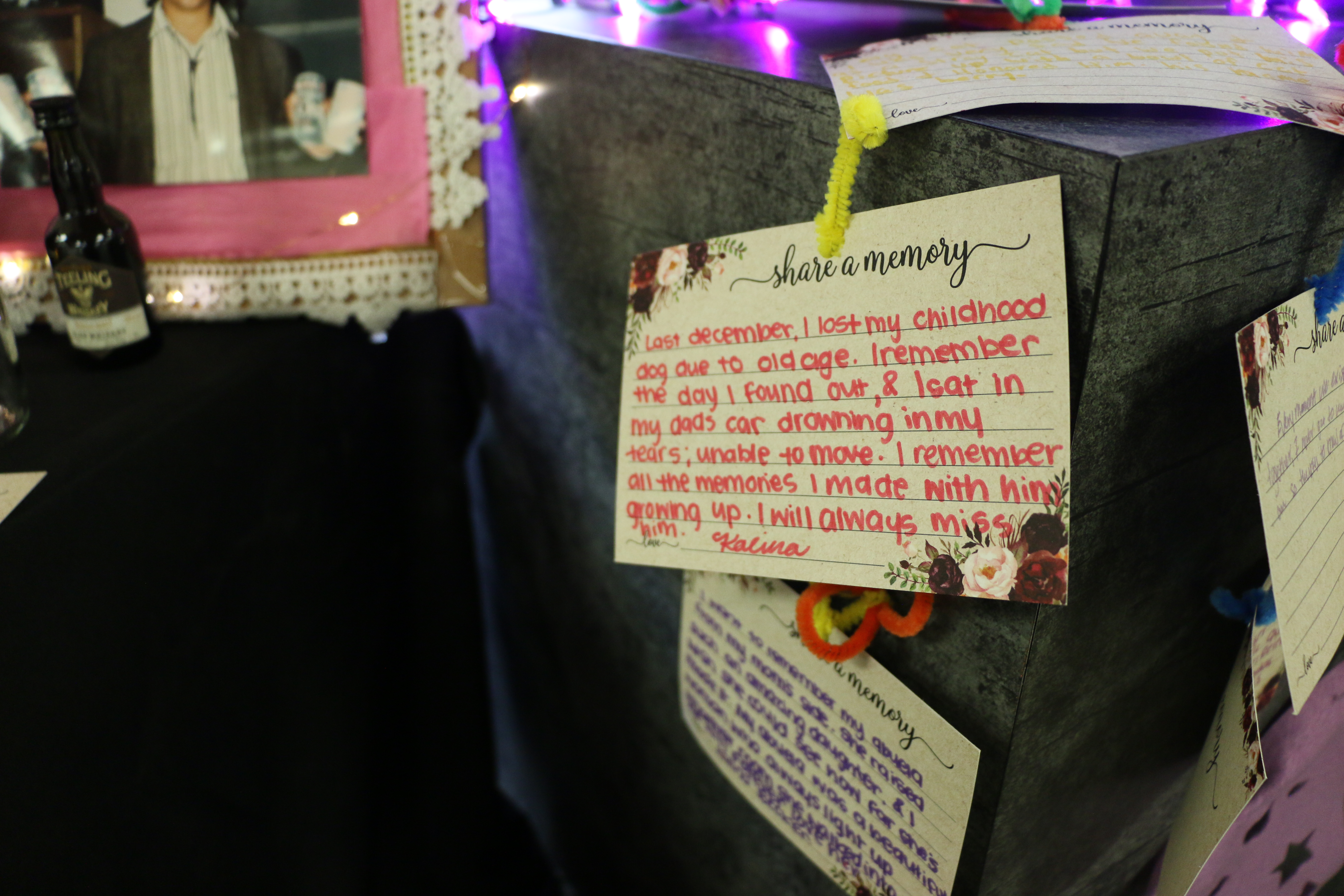
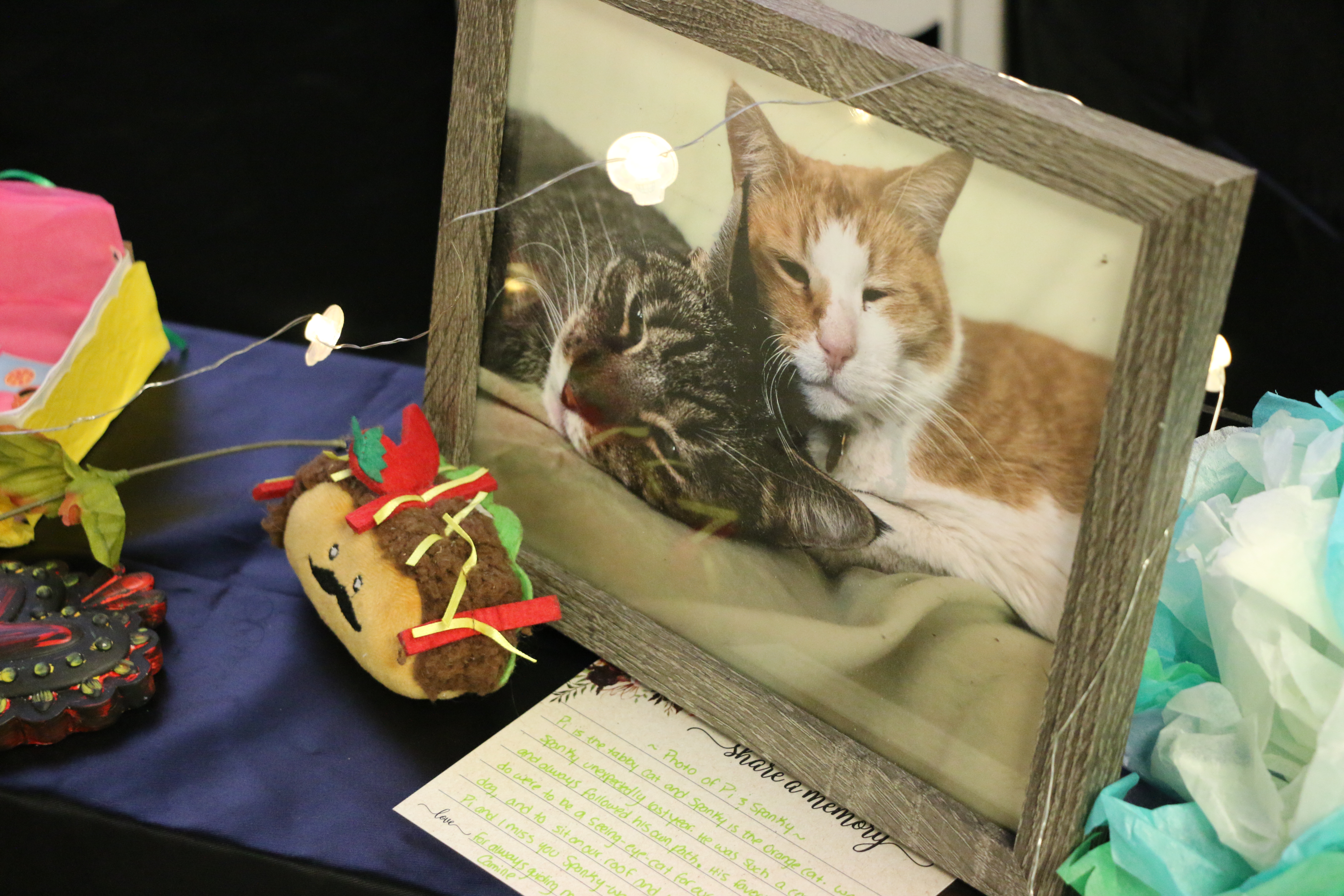
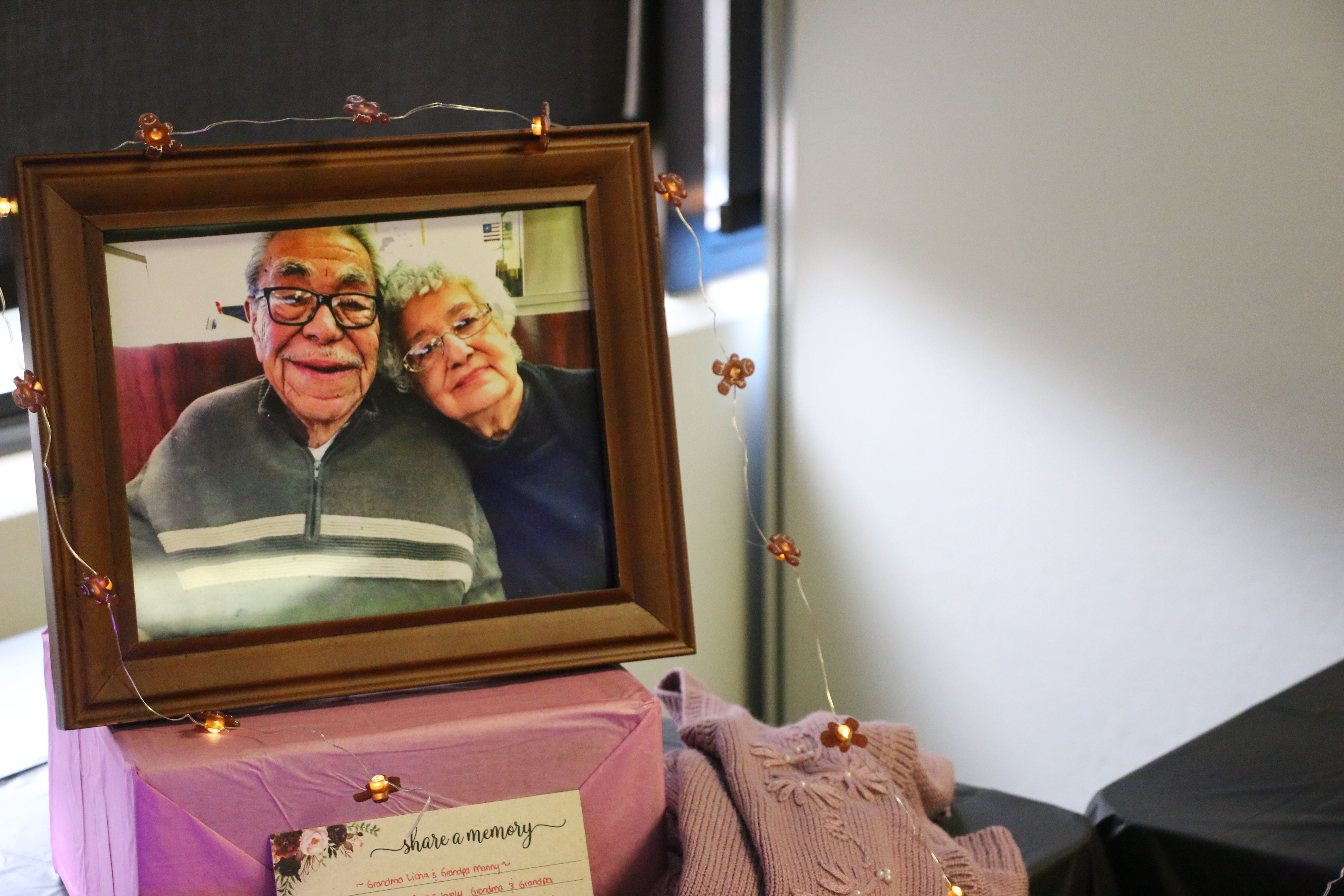
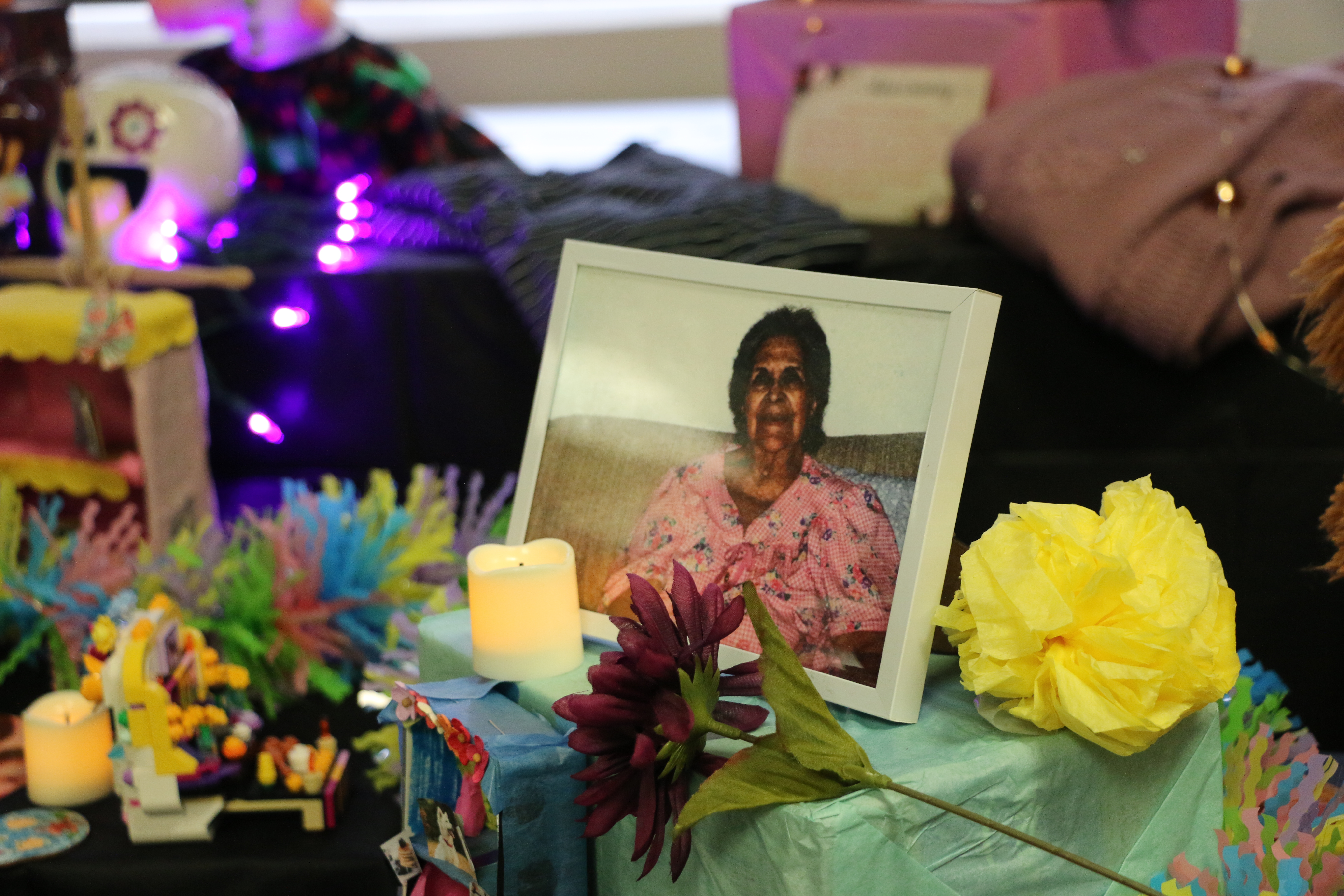


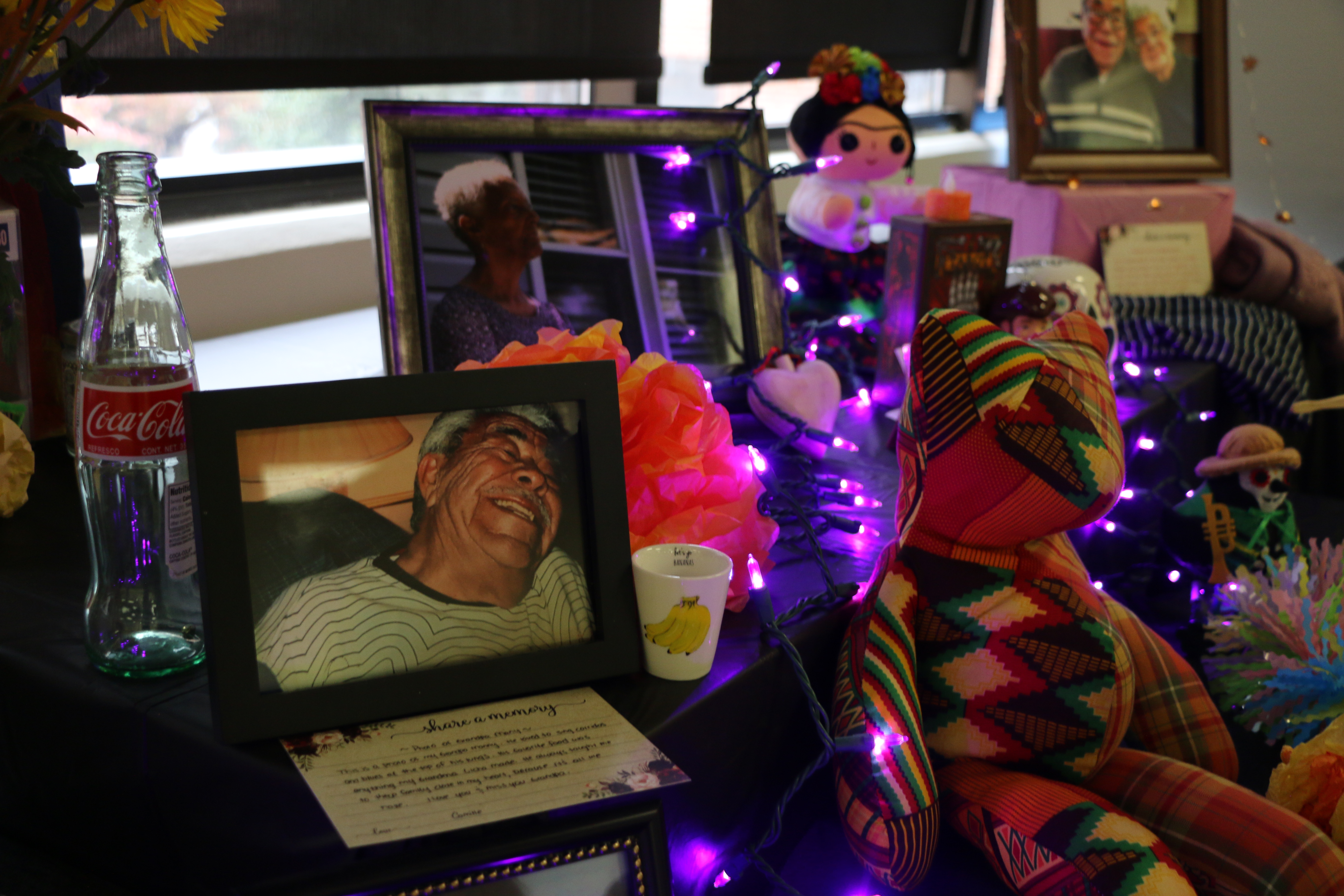
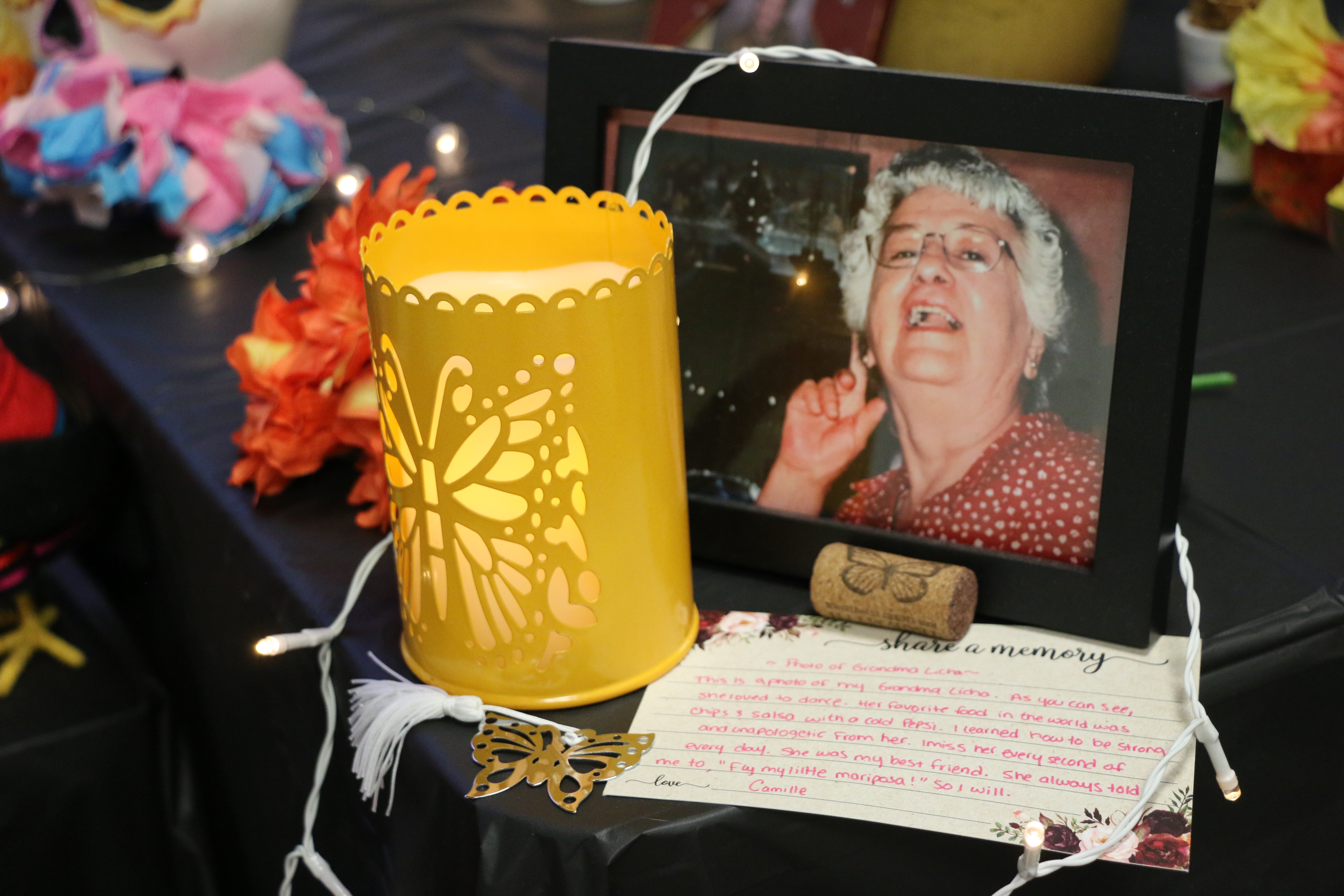
Images of memories, commemorations and pictures from the 2025 Día de los Muertos Community Ofrenda; PC: Camille Maria Acosta
The Kentucky Folklife Program
Established in 1989, the Kentucky Folklife Program (KFP) is the Commonwealth’s statewide public folklife program, with the mission to document, present, and conserve the diverse traditional cultures and heritage of Kentucky. In 2012, the KFP moved from Frankfort to the Department of Folk Studies and Anthropology at WKU.
For more information, contact KFP Folklife Specialist Camille Maria Acosta: camille.acosta@wku.edu or KFP director Brent Björkman: brent.bjorkman@wku.edu
Kentucky Museum
Mission
The Kentucky Museum enhances the academic mission of Western Kentucky University and provides quality educational and cultural experiences for our campus and community.
Vision
The Kentucky Museum is a teaching museum with premier cultural collections utilized to complement, support, and challenge the academic experience. We also provide a gathering place for our campus and community to come to know and celebrate who they are as individuals and Kentuckians in the 21st century.
WKU Department of Society, Culture, Crime, & Justice Studies
Here, related social science disciplines unite to foster a deeper appreciation of complex issues affecting individuals, communities, and societies. Our department is dedicated to fostering student success through engaging degree programs and experiential learning that lead to meaningful careers. The discoveries and insights of our academic disciplines provide understanding of and solutions to the social, cultural, and consequences of human behavior in the past and present.
Western Kentucky University
Western Kentucky University prides itself on positioning its students, faculty and staff for long term success. As a student-centered, applied research university, WKU helps students expand on classroom learning by integrating education with real-world applications in the communities we serve. Our hilltop campus is located in Bowling Green, Kentucky, which was recently named by Reader’s Digest as one of the nicest towns in America, just an hour’s drive from Nashville, Tennessee.
 Kentucky Folklife Program
Leave a comment